
When a production car is described as “the quickest ever,” it usually triggers skepticism—especially when the claim comes from a four‑door sedan. Yet the Taycan Turbo GT delivers a statistical package that pushes the boundaries of what an electric vehicle can do on a straight line.
- 0–60 mph: 2.1 seconds with launch control.
- Track top speed (summer tires): 190 mph.
- Maximum power: 1,019 HP (760 kW).
- Peak torque: 914 lb‑ft (1,240 Nm).
- Battery charging (10–80%): 18 minutes.
These figures are not merely marketing buzzwords; they translate into real-world performance that rivals—and in some respects surpasses—many purpose‑built
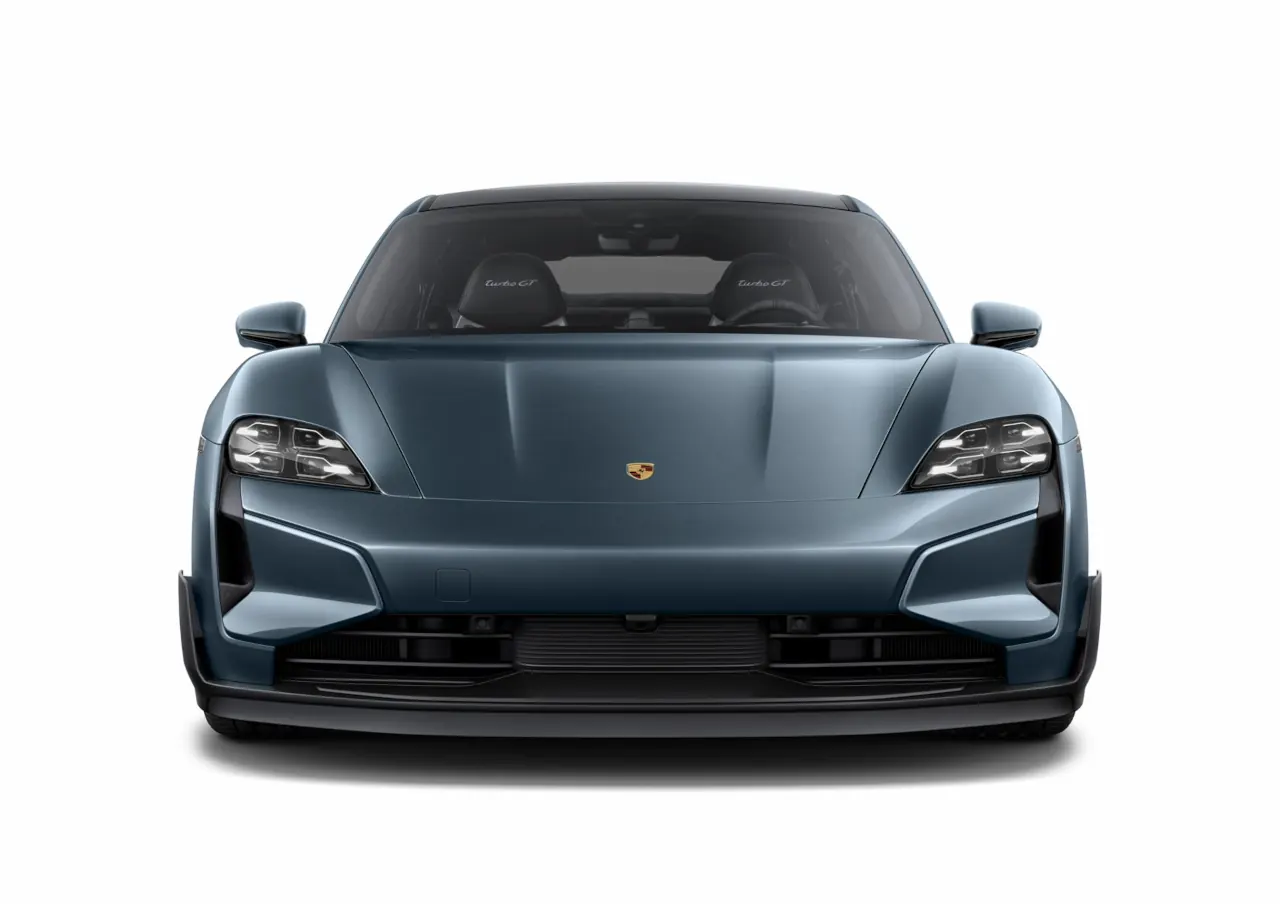
Image obtained with thanks from Porsche.
hypercars. The Taycan Turbo GT uses two electric motors mounted on the front and rear axles, providing instant torque delivery across a broad power band. This configuration allows the sedan to sprint from zero to 60 mph faster than most conventional sports cars while maintaining stability through advanced traction management.
Weissach Package: Weight, Aerodynamics, And Cost
Porsche’s “Weissach” designation refers to an engineering team that specializes in performance tuning. The Taycan Turbo GT with the Weissach package is lighter by 165lb (75kg) than its non‑Weissach counterpart. That reduction comes from a combination of structural tweaks, the removal of rear seats, and the use of high‑performance Pirelli Trofeo RS tires.
The package also adds a large fixed wing at the rear to generate downforce, improving grip during hard acceleration. Despite these additions, Porsche has not increased the sticker price: the Weissach version retains the same $231,995 MSRP as the standard Taycan Turbo GT. This pricing strategy is unusual in the high‑performance segment, where aerodynamic upgrades and weight reduction typically command a premium.
Drag Racing Regulations And The Aussie Ban
In Australia, drag racing is governed by the International Hot Rod Association (IHRA). The IHRA sets a 150 mph speed limit for production cars on most Australian drag strips. Vehicles that exceed this threshold must be equipped with parachutes to bring them safely to a stop after the finish line.
The Taycan Turbo GT broke this rule when it completed a standing quarter mile in 9.083 seconds, setting the fastest time by an unmodified production car on any Australian drag strip. Its trap speed of 156.6 mph places it squarely in “unsafe” territory according to IHRA standards. The sedan was subsequently banned from Australian drag strips for exceeding the 150 mph ceiling.
It is worth noting that the Taycan Turbo GT’s performance comes without the elaborate safety gear—such as roll cages, reinforced frames, and parachutes—that many drag‑race enthusiasts install on purpose‑built machines. Instead, Porsche equips the sedan with high‑performance carbon‑ceramic brakes capable of dissipating heat from a 156 mph finish line. The combination of instant torque, low weight, and robust braking systems allows the Taycan Turbo GT to decelerate effectively without additional drag‑race safety equipment.
Nürburgring Performance In Context
Track performance is another arena where the Taycan Turbo GT shines. Porsche reported a lap time of 7:07.5 at the Nürburgring Nordschleife—an achievement that eclipses several high‑end sports cars:
- Beats the standard Taycan Turbo S by 26 seconds.
- Outpaces the Tesla Model S Plaid by more than 17 seconds.
For a production sedan, such lap times are astonishing. The Taycan Turbo GT’s lightweight construction, combined with instant torque and aerodynamic stability, allows it to navigate the Nürburgring’s complex corners with remarkable speed. In comparison, most purpose‑built drag cars spend their performance budget on straight‑line acceleration at the expense of cornering agility; the Taycan Turbo GT balances both.
Production Sedan Vs Purpose‑Built Drag Machines
The conversation around the Taycan Turbo GT often revolves around its place in the broader context of electric supercars. While it shares a powertrain with the Porsche Taycan Turbo S, the Weissach version’s weight savings and aerodynamic enhancements give it an edge in both straight‑line speed and track performance.
Purpose‑built drag machines—whether gasoline or electric—typically require significant modifications: reinforced chassis, specialized tires, roll cages, and parachutes. These upgrades can cost well over $100,000. The Taycan Turbo GT achieves comparable quarter‑mile times without such investments because its factory design already incorporates many of the necessary performance elements. The result is a showroom‑ready sedan that delivers supercar‑level speed while retaining practical features like seating for four adults and full warranty coverage.
Future Of Production Electric Performance
The Taycan Turbo GT challenges conventional notions of what a “production car” can achieve. Its record‑breaking quarter mile, 190 mph track top speed, and Nürburgring lap time demonstrate that high performance does not have to come at the cost of everyday usability.
Manufacturers may look to the Taycan Turbo GT as proof that electric powertrains can deliver both instantaneous torque for drag racing and sustained output for track driving. As battery technology improves—reducing weight, increasing energy density, and shortening charging times—the next generation of production sedans could push these numbers even further.
In the meantime, the Taycan Turbo GT remains a milestone: a four‑door sedan that redefines speed, efficiency, and practicality all at once. Its combination of power, agility, and accessibility signals a shift toward a new class of high‑performance vehicles—electric, production‑ready, and ready to race on any track that accepts them.