
The Record‑Breaking Run of the Yanwang U9 Extreme
When Marc Basseng pushed the Yanwang U9 Extreme to its limits on Germany’s Papenburg test track, he was not just chasing a number; he was rewriting the history of hypercars. On that day the all‑electric machine left behind the Bugatti Chiron Super Sport 300+ and even the Rimac Nevera, reaching 308.37 mph (496.22 km/h) in a single‑way run. While official two‑way records still belong to SSC’s Tuatara at 282.9 mph, the raw figure speaks volumes: the Yanwang U9 Extreme is the fastest electric car ever produced and arguably the new king of speed.
The one‑way nature of the record means it was measured in a single direction. Even so, the performance benchmark set by the Yanwang U9 Extreme remains unmatched, underscoring China’s growing influence in high‑performance automotive engineering.
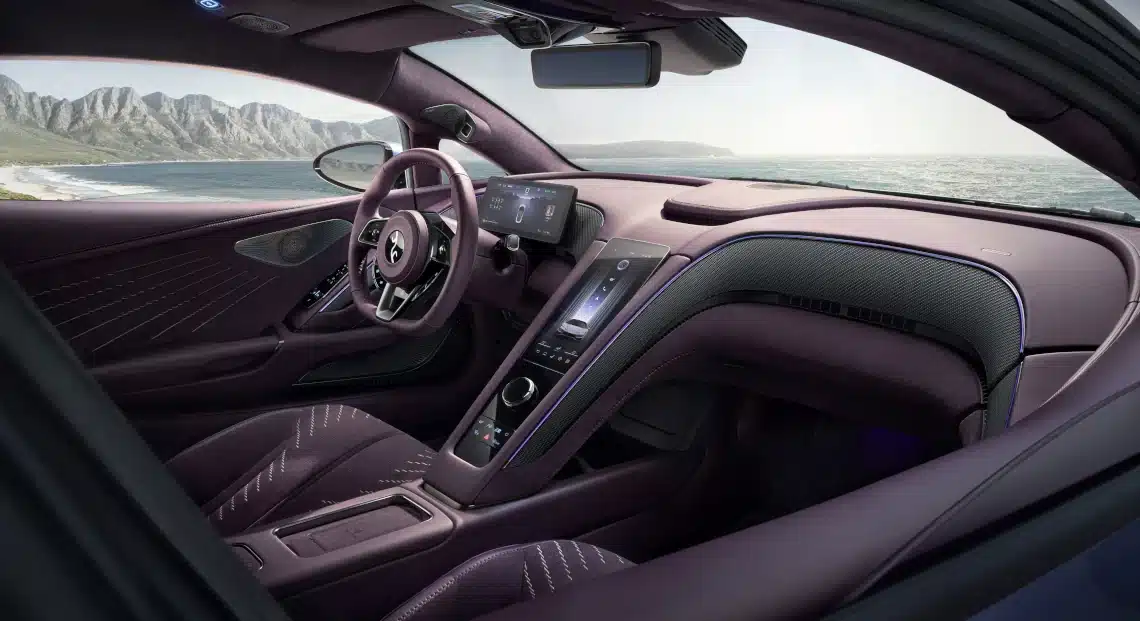 BYD Yangwang U9 interior.
Image obtained with thanks from BYD.
Power and Performance: How Brute Force Wins
At the heart of the Yanwang U9 Extreme are four electric motors that together deliver an astonishing 2,978 brake horsepower (bhp). Brake horsepower is the metric that truly matters for acceleration; it represents the power actually transmitted to the wheels after drivetrain losses. By contrast, horsepower measures the engine’s raw output before those losses.
Doubling the 1,288 bhp of the regular U9, the Yanwang U9 Extreme’s motors spin up to 30,000 rpm thanks to BYD’s use of ultra‑thin super‑silicon steel—only 0.1 mm thick in mass production. This material not only reduces weight but also enhances structural rigidity, allowing the motors to operate at higher speeds without compromising reliability.
The powertrain is built on BYD’s first 1,200‑volt production platform—a leap from the existing 800‑volt system found in earlier U9 models. The higher voltage allows for a more efficient flow of electricity, translating into quicker bursts of power and reduced heat generation—up to 67 % less than the previous 800‑volt setup.
Battery Technology: Blade Power and Discharge Capacity
The Yanwang U9 Extreme’s battery pack is based on BYD’s Blade technology, known for its safety, energy density, and longevity. Weighing in at 2,480 kg overall, the car’s battery contributes significantly to its mass but also provides a high discharge rate of 30C. This means the batteries can deliver 30 times their stored energy per hour—a critical factor when pushing the vehicle toward top‑speed thresholds.
Battery weight and discharge capacity directly (and significantly) influence performance metrics such as acceleration, range, and top speed. In the Yanwang U9 Extreme’s case, the carefully balanced mass ensures that the high power output does not translate into excessive inertia, while the 30C capability guarantees that enough energy can be delivered to sustain peak velocity on a straight track.
Lap Times That Speak Volumes
Beyond the record‑breaking speed run, the Yanwang U9 Extreme has demonstrated its prowess on one of the world’s most demanding circuits: the Nürburgring Nordschleife. The car completed the lap in 6 min 59.157 s, shaving six seconds off the Rimac Nevera and coming within three seconds of Porsche’s GT3 RS.
These figures illustrate that the Yanwang U9 Extreme is not merely a one‑dimensional speed machine; it balances high top speed with exceptional track performance—a hallmark of true hypercar engineering.
Production Limits and Future Prospects
Only 30 units of the Yanwang U9 Extreme will be produced, making each car extremely exclusive. Yet BYD’s ambition appears far from limited to this model alone. With its expanding lineup and continued investment in high‑voltage platforms and advanced battery chemistries, the company is poised to influence global automotive trends for years to come.
Why the Yanwang U9 Extreme Matters
- First 1,200‑V production platform: Sets a new standard for electric powertrains.
- Highest brake horsepower in a production car: 2,978 bhp from four motors.
- Unprecedented top speed: 308.37 mph single‑way record.
- Competitive lap times: Nürburgring Nordschleife in under seven minutes.
These achievements underscore that the Yanwang U9 Extreme is not a novelty; it represents a significant leap forward for electric hypercars, challenging long-held beliefs about where speed can be found in automotive engineering.
The Bigger Picture: China’s Rise in Hypercar Development
For decades, Europe and America dominated the hypercar arena. BYD’s Yanwang U9 Extreme flips that narrative on its head, proving that Chinese manufacturers can build vehicles that compete—and even surpass—the best from traditional powerhouses. While production numbers are limited, the technology showcased here sets a benchmark for future electric supercars worldwide.
Conclusion
The Yanwang U9 Extreme is more than an impressive speed record; it’s a testament to how advanced materials, high‑voltage platforms, and aggressive engineering can redefine performance boundaries. By combining brute force power output with cutting‑edge battery technology, BYD has delivered a vehicle that challenges the status quo and sets new standards for electric hypercars.
As global automakers continue to pivot toward electrification, the lessons learned from the Yanwang U9 Extreme will resonate far beyond this single model. The future of speed may well be electric, and the Yanwang U9 Extreme is leading that charge.