
I purchased an ESP32-S3-based development board from UnexpectedMaker, a brand that designs and builds circuit boards in Australia. The board is the ProS3[D] ESP32-S3. It has a combination of interesting features for developers of demanding projects, including but not limited to:
u.FL Antennae Connector + 3D High-Gain Antennae
The ProS3[D] is equipped with a u.FL antennae connector in addition to its on-board antennae to provide users with the option to connect a larger external antennae to boost WiFi signal strength and network performance. An external antennae may also be needed if you are building a project inside a metal container that may degrade the WiFi signal.
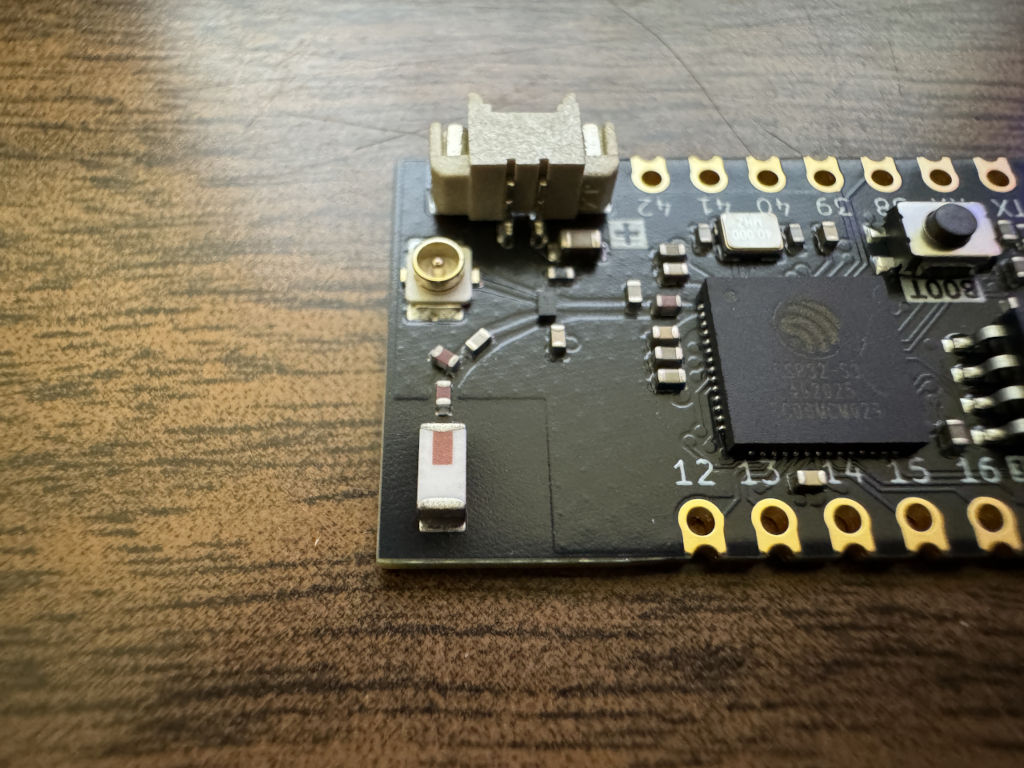
Image credit: Kompulsa.
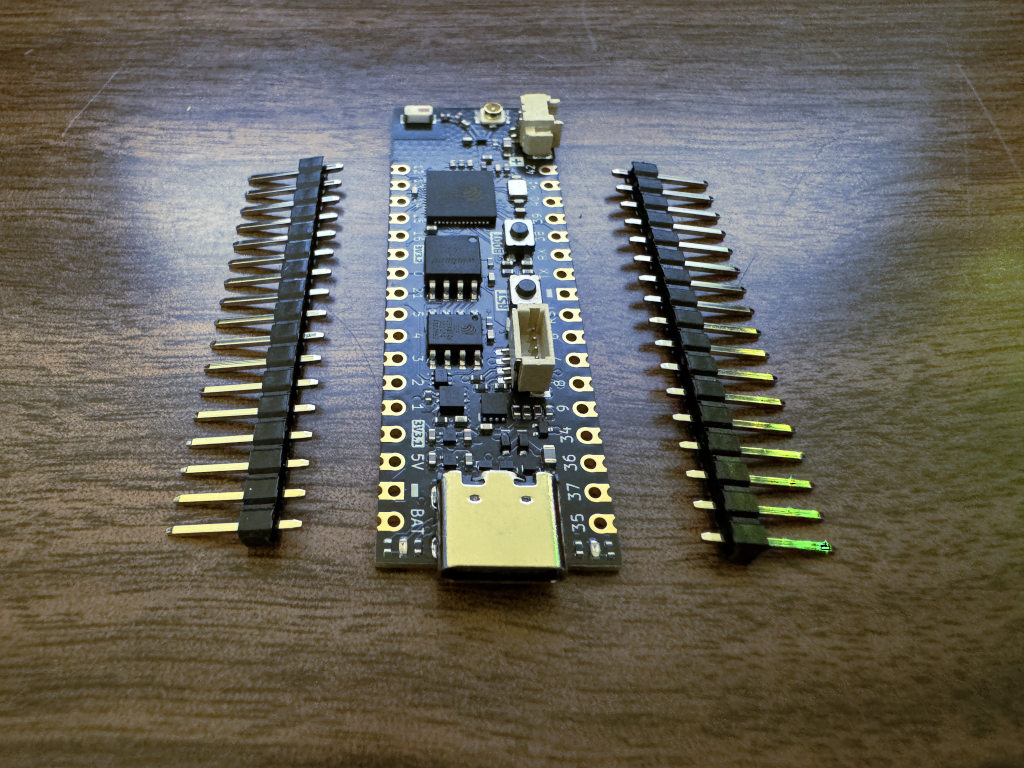
STEMMA QT Connector
The STEMMA QT connector is a fast, convenient way to connect i2C peripherals to your ESP32 development board without soldering pin headers nor struggling with individual pin plugs that slip off. The STEMMA connectors I have seen so far have a reasonably tight fit that prevents the cable from slipping out during operation.
STEMMA plugs and cables are also horizontal (unlike conventional pin headers) and tiny, which means that they save a significant amount of vertical space — resulting in thinner projects. STEMMA-compatible peripherals for ESP32 boards are often equipped with two STEMMA ports so that you can plug one end into the ESP32 board, and the other end into a second STEMMA compatible device. For example: ESP32 Board <STEMMA cable> Sensor Development Board <STEMMA cable> i2C screen.
ESP32-S3 Chip
The ProS3[D] contains an Xtensa processor with dual 240 MHz LX7 cores, an ultra low power RISC-V co-processor to conserve power, as well as:
- Bluetooth 5 plus Mesh.
- 2.4 GHZ WiFi 4 802.11b/g/n.
- 512KB of SRAM.
Other Features Offered By The Board
- USB-C port with electrostatic discharge (ESD) protection and back-feed protection.
- Built-in charger for single lithium polymer cells.
- 27 GPIO pins.
- 16 MB QSPI flash.
- 8 MB of extra QSPI PSRAM.
- Two 700 mA 3.3 Volt LDO voltage regulators. One powers the board itself, and the second is to power external peripherals such as sensors.
- Low-power RGB LED.
ESP32 ProS3[D] Pinout
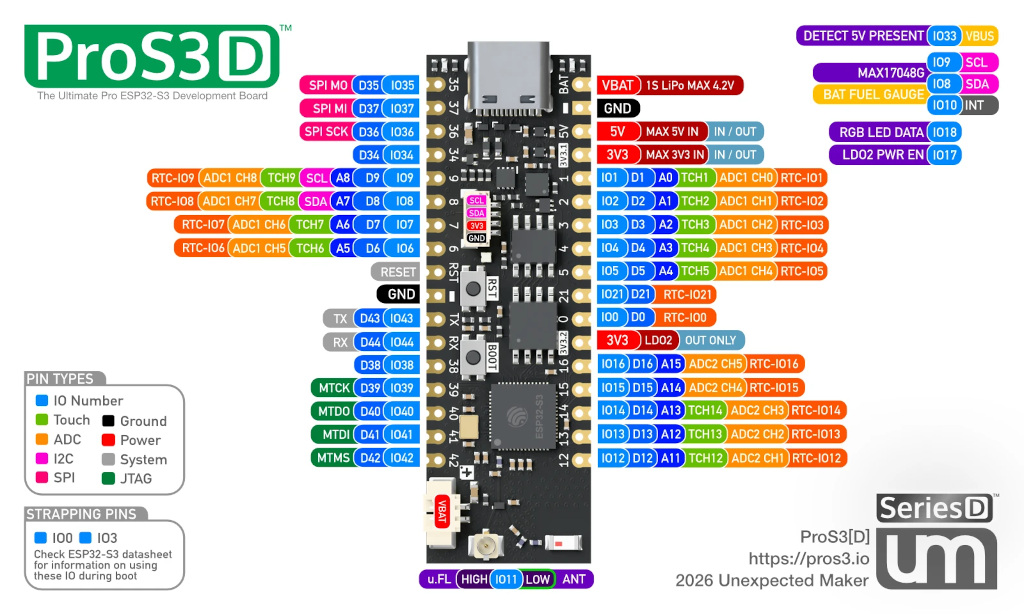
If you want to use an external antennae, you can broaden your options by purchasing a u.FL to SMA adapter so that you can connect it to one of the many SMA antennae available on the market.
My least favourite characteristic about this board is the lack of screw holes.